The Evolution of the Sin Tax: From the Whiskey Rebellion to the Battle for Your Dinner Plate
Historically, this took the form of a "sin tax"—an excise tax levied on specific goods deemed harmful to society, like tobacco, alcohol, and gambling. Today, however, the definition of "sin" is undergoing a radical, top-down transformation. Global policy groups, technocrats, and environmental agencies are actively working to move natural meats, particularly beef, out of the "essential food" category and into the "vice" category to penalize your diet through financial force.
To understand how we arrived at a point where a backyard cheeseburger is treated like a pack of cigarettes, we have to look back at how the sin tax was used to build the foundations of modern government.
The Ancient Origin: Revenue Without Smell
The mechanics of the sin tax have always been rooted in economic pragmatism rather than pure morality. In the 1st Century AD, Roman Emperor Vespasian imposed a tax on public toilets and the collection of urine (which was highly valuable for chemical tanning and laundering). When his son criticized the tax as vulgar, Vespasian famously held up a gold coin and uttered the phrase, “Pecunia non olet”—"Money does not smell." The lesson was clear: revenue is valuable to the state, regardless of its source.
By the 18th century, foundational economists like Adam Smith openly laid out the blueprint for modern excise taxes. In The Wealth of Nations (1776), Smith noted that luxury items like sugar, rum, and tobacco were universally consumed but not strictly necessary for survival. They were the perfect targets for taxation because people would grumble, but their daily habits would force them to keep paying, filling the state’s treasury without disrupting vital infrastructure.
How a Sin Tax Built the United States
Sin taxes are not just a footnote in economic history; they quite literally saved the United States government from early bankruptcy.
Following the Revolutionary War, the newly formed U.S. government was drowning in massive debt. Treasury Secretary Alexander Hamilton realized the country would collapse without a reliable revenue stream. In 1791, he enacted the nation's first domestic excise tax: The Whiskey Tax. Hamilton chose spirits because it was a luxury vice, and he openly stated he hoped the tax would encourage public sobriety and discipline.
The tax triggered the violent Whiskey Rebellion, where angry farmers assaulted tax collectors. In response, President George Washington personally put on his military uniform and led an army of 13,000 troops to crush the uprising. This historic event sent a definitive message: the federal government possessed the absolute legal and military authority to directly tax consumer habits and enforce its economic will.
The Modern Rebranding: Targeting the Meat Counter
For over two centuries, sin taxes were strictly reserved for optional vices. But today, globalist organizations like the United Nations (UN) and the World Economic Forum (WEF) are leveraging the exact same historical tax mechanics to target a foundational human staple: natural meat.
Under the banner of environmental engineering and climate compliance, red meat is being rebranded by policy makers as a "negative environmental externality." Because livestock production emits methane, global climate advisory bodies argue that consumers must be financially penalized to alter their behavioral choices.
This modern sin tax strategy is being deployed through three main mechanisms:
1. Stripping Tax Protections
Before creating entirely new laws, governments are removing existing safeguards. Most Western nations utilize lower Value-Added Tax (VAT) rates or reduced sales taxes on basic groceries to ensure food remains affordable for working-class families. Climate panels are actively pressuring governments to strip meat of its "essential food" VAT privileges, causing shelf prices to spike overnight.
2. Upstream Emission Penalties
Rather than just taxing the consumer at the cash register, governments apply the "polluter pays" principle directly to the agricultural sector. By imposing heavy environmental compliance fees and emission taxes directly on cattle ranchers for their livestock and fertilizer use, governments force production costs upward. Ranchers are left with two choices: downsize their herds or pass the costs down the supply chain, making natural beef an expensive commodity.
3. The Push for Engineered Substitutes
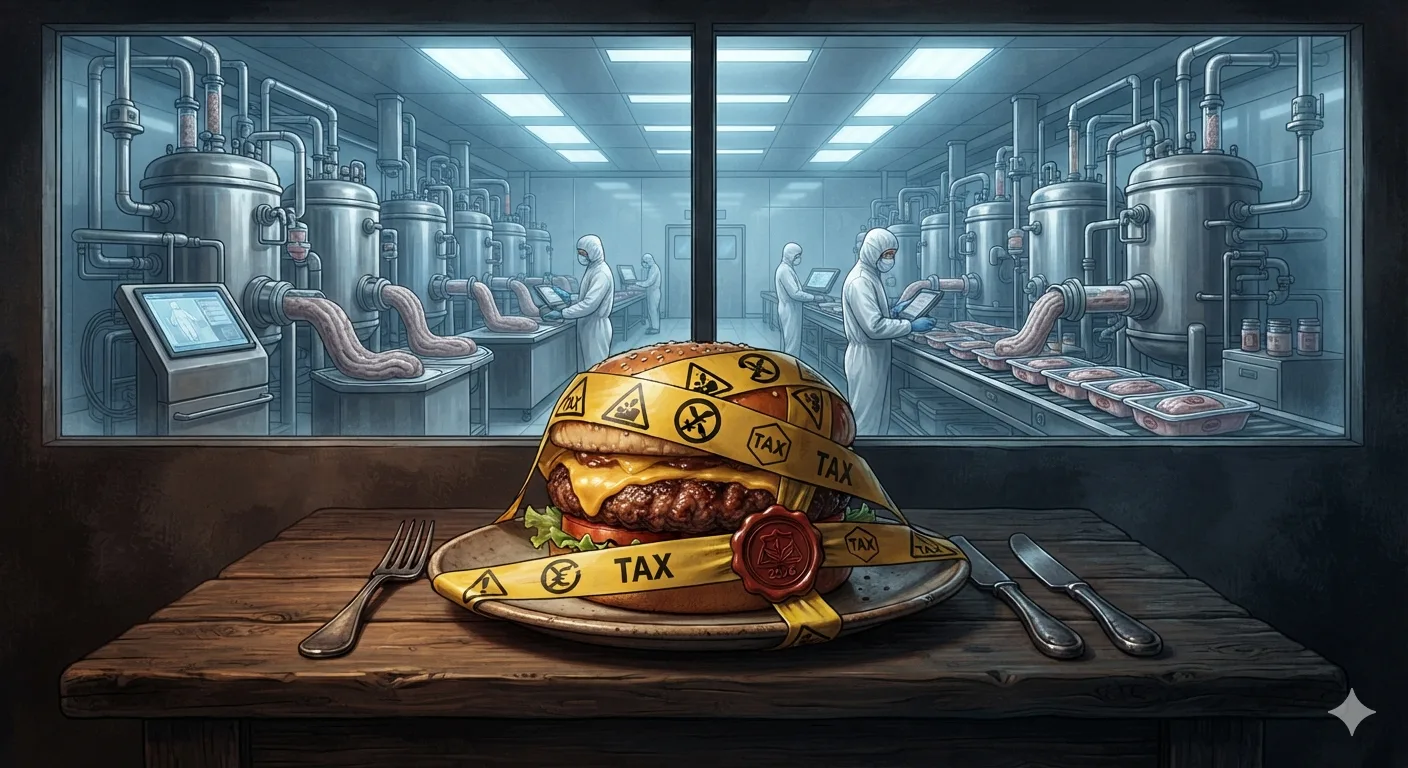
As natural livestock populations are systematically pressured downward, the shrinking supply forces prices to skyrocket. This creates an intentional economic squeeze. While the ultra-wealthy can easily absorb higher costs and continue eating natural beef just as they always have, the working class is increasingly priced out. This financial barrier corners average consumers into turning to cheaper, heavily processed, and corporate-patented alternatives, such as lab-grown synthetic meats or alternative plant proteins.
The Two-Tiered Food System
When we look at the modern push to regulate and tax the global food supply, it mirrors a historical pattern. Throughout medieval feudal systems, the ruling nobility reserved hunting rights for livestock and big game on their private estates, while the peasant population was legally restricted to grains and agriculture.
The implementation of "green" sin taxes on beef risks resurrecting this exact divide through economic leverage. By treating natural, nutrient-dense food as a societal vice, modern technocrats are using a centuries-old financial weapon not to save the planet, but to reshape human behavior, restrict independent farming, and control what sits on the average citizen's dinner plate.